📞  — free, 24/7
— free, 24/7
— free, 24/7
| Package | Price per Dose | Price | |
|---|---|---|---|
| 360 pills | $1.49 |
$597.36
$537.62
Free shipping
|
|
| 180 pills | $1.60 |
$320.14
$288.13
Free shipping
|
|
| 120 pills | $1.81 |
$242.06
$217.85
Free shipping
|
|
| 90 pills | $2.06 |
$204.96
$184.47
|
|
| 60 pills | $2.28 |
$152.25
$137.03
|
|
| 30 pills | $2.41 |
$80.02
$72.02
|
|
| 360 pills | $2.60 |
$1,040.51
$936.46
Free shipping
|
|
| 180 pills | $2.64 |
$527.08
$474.37
Free shipping
|
|
| 120 pills | $2.69 |
$359.19
$323.27
Free shipping
|
|
| 90 pills | $2.78 |
$277.20
$249.48
Free shipping
|
|
| 60 pills | $2.85 |
$189.35
$170.41
|
|
| 30 pills | $3.22 |
$107.35
$96.62
|
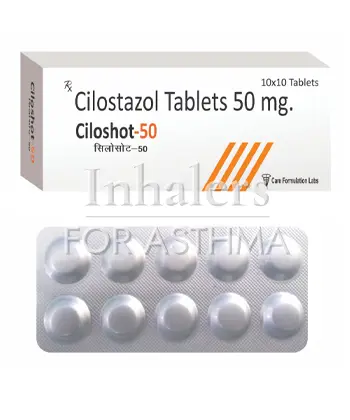
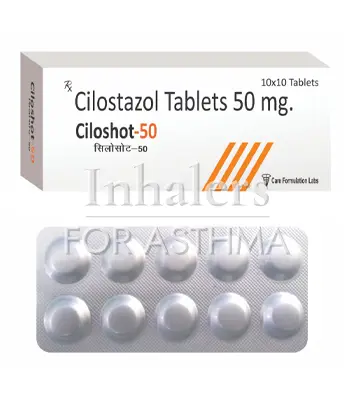
Cilostazol is a phosphodiesterase type 3 (PDE3) inhibitor with antiplatelet and vasodilatory effects. It inhibits hydrolysis of cyclic adenosine monophosphate (cAMP) in platelets and vascular smooth muscle, thereby reducing platelet aggregation and promoting vasodilation; its primary therapeutic use is relief of intermittent claudication in peripheral arterial disease.
Cilostazol belongs to the PDE3-inhibitor class. By elevating intracellular cAMP in platelets and smooth muscle, it suppresses aggregation and enhances peripheral blood flow. These actions support improved walking tolerance in claudication.
The agent is typically used as part of a structured program of exercise for symptom relief in peripheral artery disease. Pharmacokinetically, cilostazol is rapidly absorbed and extensively metabolized by hepatic enzymes, with active metabolites contributing to effect. A common dosing regimen is 100 mg twice daily after meals; onset of benefit is usually after several weeks of therapy.
Within the PDE3-inhibitor family, cilostazol offers selective PDE3 inhibition with dual antiplatelet and vasodilatory actions. Dipyridamole inhibits several phosphodiesterases, including PDE3 and PDE5, and relies more on vasodilation with variable antiplatelet potency. These pharmacodynamic differences influence clinical use and tolerability in peripheral vascular disease.
Safety and interaction considerations also differ. Cilostazol has a well-established profile of headaches and edema; dipyridamole can cause headache, flushing, and hypotension; pentoxifylline provides rheologic benefits by distinct mechanisms and is sometimes used as an adjunct for claudication. Selection depends on cardiovascular status, concomitant medications, and patient tolerance to adverse effects.
The principal indication is symptomatic relief of intermittent claudication due to peripheral artery disease. Cilostazol improves pain-free walking distance and functional capacity when combined with supervised exercise therapy. It is not indicated for acute ischemic symptoms and should not be used as monotherapy for cardiovascular prevention without established PAD.
Treatment decisions consider cardiovascular risk, hepatic function, and patient preferences. Benefits may be diminished by smoking or hepatic impairment, and careful monitoring is advised in the elderly and those with comorbidity. Cilostazol is typically reserved for patients who lack adequate benefit from exercise alone or who cannot tolerate alternative antiplatelet strategies.
The following comparison highlights select agents used for claudication symptoms. Cilostazol is a selective PDE3 inhibitor with both antiplatelet and vasodilatory effects; dipyridamole and pentoxifylline act through broader PDE inhibition or rheologic mechanisms, with distinct adverse-event profiles. Dosing, contraindications, and drug interactions differ and guide individual therapy choices.
| Agent | Primary mechanism | Main indication | Notable adverse effects |
|---|---|---|---|
| Cilostazol | PDE3 inhibition; increased cAMP in platelets and vascular smooth muscle | Intermittent claudication in PAD | Headache, dizziness, palpitations, edema |
| Dipyridamole | PDE3/PDE5 inhibition; vasodilation and antiplatelet effects | Adjunct antiplatelet therapy; vasodilatory uses | Headache, flushing, hypotension |
| Pentoxifylline | Claudication with improved erythrocyte deformability | GI upset, dizziness, flushing |
Choice among these agents reflects efficacy for walking distance, cardiovascular risk, and tolerability profile.
Cilostazol is generally well tolerated but commonly causes headache, palpitations, diarrhea, and edema. Tachycardia and other thromboembolic concerns are infrequent. It is contraindicated in symptomatic heart failure, active major bleeding, or known hypersensitivity. Caution is warranted in the elderly and in those with hepatic or renal impairment, given altered exposure and risk of adverse events.
Drug interactions are largely mediated by CYP3A4 and CYP2C19 pathways. Concomitant strong inhibitors or inducers of these enzymes can markedly alter cilostazol levels, necessitating dose adjustment or avoidance. Monitoring for edema, blood pressure changes, and signs of bleeding is advised. Data on pregnancy and lactation are limited; use should be guided by risk–benefit assessment. Regular follow-up assists in evaluating efficacy and safety in individual patients.
14–21 days. Free from $200.00 .
5–9 days. $30.00
−10% when paying with cryptocurrency.
−10% on all repeat orders.
All orders are packed in neutral, unbranded boxes with no product name on the outside.