📞  — free, 24/7
— free, 24/7 — free, 24/7| Package | Price per Dose | Price | |
|---|---|---|---|
| 180 pills | $1.02 | $245.96 $184.47 | |
| 120 pills | $1.14 | $182.70 $137.03 | |
| 90 pills | $1.34 | $159.28 $119.46 | |
| 60 pills | $1.49 | $119.45 $89.59 | |
| 30 pills | $1.76 | $70.26 $52.69 | |
| 180 pills | $2.06 | $494.28 $370.71 Free shipping | |
| 120 pills | $2.20 | $351.38 $263.53 Free shipping | |
| 90 pills | $2.39 | $285.78 $214.34 Free shipping | |
| 60 pills | $2.55 | $203.79 $152.84 | |
| 30 pills | $2.81 | $112.42 $84.32 |
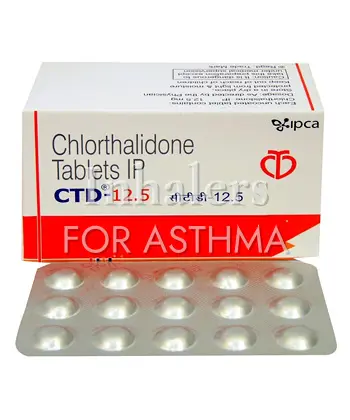
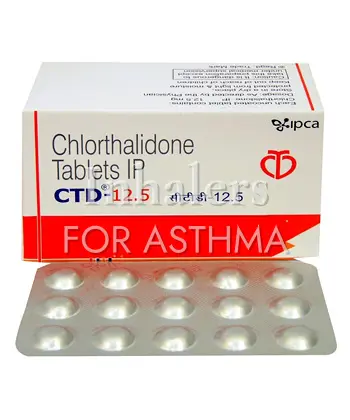
Chlorthalidone is a long-acting thiazide-like diuretic whose antihypertensive effect persists beyond 24 hours. Introduced in the late 1950s, it remains widely used for blood pressure control and edema management.
Pharmacologic action centers on inhibition of the distal convoluted tubule Na-Cl cotransporter, increasing urinary excretion of sodium, chloride, and water. The drug also promotes modest arteriolar dilation, contributing to a reduction in systemic vascular resistance.
Common medical uses include essential hypertension and edema from fluid overload. It is frequently prescribed as part of combination therapy when a sustained diuretic effect is beneficial.
In selected patients, chlorthalidone lowers cardiovascular risk by helping maintain blood pressure within target ranges. It is also used for edema associated with heart failure, cirrhosis, and chronic kidney disease, and as a preventive measure in certain cases of idiopathic hypercalciuria.
For adults the usual antihypertensive dose is 12.5–25 mg once daily, with uptitration to 50 mg daily if needed; the maximum daily dose is often cited as 100 mg.
Oral tablets may be taken with or without food. Dosing is commonly in the morning to minimize nocturia. For edema, higher daily doses (50–100 mg) may be used, divided if necessary. Dose adjustments are required in renal impairment and during frail elderly care.
Do not use in patients with anuria or significant renal impairment. Caution is required in those with gout, diabetes mellitus, potassium or sodium disorders, dehydration, or a history of negative fluid balance. Routine laboratory monitoring of electrolytes and uric acid is advised.
Potential drug interactions include nonsteroidal anti-inflammatory drugs, which may diminish diuretic efficacy and worsen renal function, and lithium, which can be affected by diuresis. Photosensitivity and hyperglycemia risk exist; hypersensitivity to sulfonamides is a consideration in rare cases.
Common side effects include electrolyte disturbances such as hypokalemia and hyponatremia, dehydration, dizziness, and orthostatic hypotension.
Other adverse effects include hyperuricemia with possible gout, impaired glucose tolerance in susceptible individuals, gastrointestinal upset, and rare hypersensitivity reactions. Patients should seek medical advice for persistent or severe symptoms.
14–21 days. Free from $200.00 .
5–9 days. $30.00
−10% when paying with cryptocurrency.
−10% on all repeat orders.
All orders are packed in neutral, unbranded boxes with no product name on the outside.