📞  — free, 24/7
— free, 24/7 — free, 24/7| Package | Price per Dose | Price | |
|---|---|---|---|
| 92 pills | $20.72 | $1,906.33 Free shipping | |
| 64 pills | $21.72 | $1,389.77 Free shipping | |
| 32 pills | $22.84 | $730.89 Free shipping | |
| 24 pills | $23.42 | $562.22 Free shipping | |
| 16 pills | $23.82 | $381.25 Free shipping | |
| 8 pills | $25.25 | $202.04 Free shipping | |
| 4 pills | $27.23 | $108.92 |
Disclaimer: This page provides general information about Zydena. It is not a substitute for professional medical advice from a clinician or pharmacist.
Why might erections be difficult to achieve or maintain despite sexual arousal?
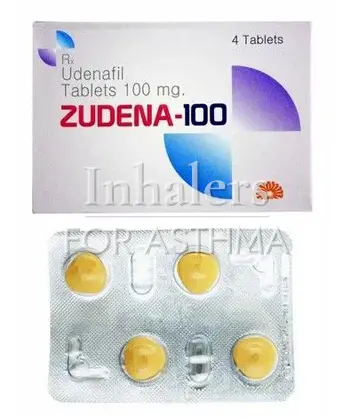
Zydena is a brand name for udenafil, a phosphodiesterase type 5 inhibitor (PDE5 inhibitor). PDE5 inhibitors work by enhancing the normal physiological response to sexual stimulation to support penile blood flow.
In clinical practice, Zydena may be considered as part of a personalized treatment plan for erectile dysfunction (ED), which is a common condition affecting adult men. The response to Zydena, like other therapies, depends on individual health status and concurrent medications.
For patients and caregivers, the information that follows is intended to support informed discussions with a healthcare professional. It does not replace individualized medical advice or the official product labeling.
Zydena is used to treat erectile dysfunction in adult men. The goal is to enable sufficient penile rigidity for sexual activity when arousal occurs, while maintaining safety in daily life.
Doctors consider Zydena when other options are unsuitable or poorly tolerated, or when a patient prefers a PDE5 inhibitor with a particular pharmacokinetic profile. Individual factors such as cardiovascular history, concurrent medications, and prior response to therapy influence selection.
In practice, Zydena may be prescribed as needed in anticipation of sexual activity. The decision depends on the patient’s goals, tolerance of side effects, and risk factors that could affect safety during sexual activity or while taking other medicines.
Check with a healthcare professional if there is any uncertainty about suitability. The official leaflet and a clinician’s guidance provide the most accurate information for the individual case.
All PDE5 inhibitors share a common mechanism: they enhance the effect of nitric oxide (NO) released during sexual stimulation, leading to smooth muscle relaxation and increased blood flow in the penis. This mechanism enables an erection in response to arousal.
Zydena (udenafil) is part of this class but may differ from other PDE5 inhibitors in pharmacokinetic properties such as onset of effect, duration of action, and tolerability in certain individuals. These nuances influence clinical decisions about which PDE5 inhibitor to use for a given patient.
Precisely how Zydena behaves in the body can be influenced by factors such as age, liver and kidney function, food intake around dosing, and interactions with other medicines. Differences among PDE5 inhibitors should be discussed with a clinician to align expectations with safety considerations.
In summary, Zydena works through the same general pathway as other PDE5 inhibitors but is selected for its particular pharmacological profile in the context of a patient’s needs and comorbidities.
The following comparison highlights common ED medicines used in the United States. The table summarizes general characteristics and is not a substitute for individualized medical advice. Always consult a clinician for personal recommendations.
| Name | Primary use | Typical onset (minutes) | Key advantage |
|---|---|---|---|
| Zydena (udenafil) | Erectile dysfunction in adult men | About 30–60 | Balanced onset with a predictable response profile; flexibility for on-demand use |
| sildenafil (Viagra) | Erectile dysfunction; also approved for other uses | About 30–60 | Extensive clinical experience and established efficacy data |
| tadalafil (Cialis) | Ed; sometimes used for daily or on-demand therapy | About 30–60 | Longer duration of action; flexible dosing options in some settings |
| avanafil (Stendra) | Erectile dysfunction | About 15–30 | Faster onset for choosing spontaneity in sexual activity |
The table reflects general expectations; individual responses vary. If uncertainty exists, check the official labeling or consult a healthcare professional. When switching among medications, a clinician may adjust timing, dosing strategy, and monitoring to optimize results and safety.
Potential advantages are not universal, and tolerability varies. A specialist will weigh risks and benefits in the context of cardiovascular health, concomitant therapies, and patient preferences.
Administration is typically on an as-needed basis prior to anticipated sexual activity. The medicine should be taken exactly as prescribed by a clinician, with attention to timing relative to planned activity.
Meals can influence onset time; a high-fat meal may delay absorption in some individuals. If timing is uncertain, it is reasonable to discuss with a pharmacist or physician how best to schedule dosing around meals and activity.
Avoid concurrent use with nitrates or nitrites. These substances are commonly found in certain heart medications and can cause dangerous drops in blood pressure when used with PDE5 inhibitors. Consultation with a clinician is essential before combining therapies.
Limit alcohol intake as it may worsen certain side effects such as dizziness or low blood pressure. If dizziness or fainting occurs, seek medical guidance to reassess treatment suitability and safety parameters.
Do not exceed the prescribed use or frequency. If a dose is missed, contact a clinician for guidance rather than taking multiple doses to "catch up." The advised approach depends on the specific product labeling and the patient’s medical history.
Storage should be at room temperature and kept away from moisture and heat. Keep medications out of reach of children and away from pets. Proper storage preserves stability and potency over time.
Common side effects may include headache, facial flushing, nasal congestion, indigestion, back pain, or dizziness. These effects are generally mild to moderate and tend to resolve with continued use or after discontinuation.
Serious adverse reactions are uncommon but can occur. Seek prompt medical attention if symptoms such as sudden vision loss, sudden hearing changes, chest pain, fainting, or an erection lasting longer than four hours appear. Persistent priapism requires urgent medical care to avoid tissue damage.
Contraindications include known hypersensitivity to udenafil or other components of the product. Use is typically avoided in patients taking nitrates or with certain cardiovascular conditions where sexual activity is advised against. The clinician will review cardiovascular risk and overall health before initiating therapy.
Patients with certain eye or vascular disorders, severe liver or kidney impairment, or those who are taking medications that interact significantly with PDE5 inhibitors should be assessed carefully due to potential safety concerns. If any of these conditions apply, a clinician may propose alternative therapies or different management strategies.
Significant interactions may occur with other vasodilator therapies, nitrates, or alpha-blockers. The combination can lead to substantial blood pressure reductions and related complications. Dosage timing and patient selection require professional oversight.
Several medications influence the metabolism of PDE5 inhibitors through liver enzymes. Changes in drug levels may affect efficacy and risk of side effects. A clinician will review the full medication list, including over-the-counter products and supplements.
Alcohol consumption in excess can potentiate dizziness, fainting, or hypotension when taking PDE5 inhibitors. Caution is advised, and discussions about alcohol use with a clinician are encouraged.
Certain antibiotics, antifungals, or anti-seizure medications may alter drug levels and interactions should be considered when planning therapy. The official labeling provides details, and professional guidance remains essential for individualized plans.
Selection between Zydena and other ED therapies depends on several factors including onset expectations, duration of action, tolerance to side effects, and patient lifestyle. A clinician weighs these elements against cardiovascular risk and concomitant medications.
Switching from another PDE5 inhibitor to Zydena may be considered when a patient experiences insufficient efficacy or intolerance with a prior agent. Dose timing, meals, and potential interactions may be revisited during the transition.
Generic versus brand considerations may influence choice in some cases. Availability and cost are not discussed here, but may affect practical decisions in real-world settings. Consultation with a pharmacist or clinician can help align therapy with personal circumstances.
Individualized assessment remains crucial. Some patients may require alternative treatments or combinations of therapies to achieve satisfactory results while minimizing safety concerns.
The comparative effectiveness of Zydena versus sildenafil varies among individuals. A clinician considers medical history, current medications, and tolerability. Direct evidence from trials is not replicated in every patient, so personal experience with a clinician-guided trial is important.
Switching between PDE5 inhibitors is sometimes appropriate when a patient does not respond adequately or experiences intolerable side effects. The transition should be performed under medical supervision, with monitoring for efficacy and safety after the switch.
Differences in onset can influence the perceived spontaneity of sexual activity. Avanafil may have a faster onset for some individuals, while Zydena offers its own pharmacokinetic profile. Personal response varies, and a clinician can help identify the best option.
Availability depends on regulatory approvals and market status. If generic options exist, a clinician or pharmacist can explain how this might affect cost and access. Check the official labeling and local prescribing information for the most current status.
Clinical choice is guided by the patient’s health status, previous response to treatment, potential drug interactions, and patient preference. Zydena may be preferred when its specific pharmacokinetic profile aligns with the treatment goals and safety considerations.
Concomitant use with nitrates or nitrite-containing medicines is typically contraindicated due to the risk of severe hypotension. A clinician will review the full medication list to prevent dangerous interactions.
Age itself is not an automatic contraindication, but older adults often have additional medical conditions and multiple medications. A careful assessment of risks and benefits is required, with ongoing monitoring as needed.
The onset of action is generally in the range of 30–60 minutes, but individual responses may vary. Food intake, particularly high-fat meals, can influence timing. If timing is uncertain, consult a clinician for personalized guidance.
Food, especially high-fat meals, may delay absorption and onset in some individuals. This can affect the timing of effectiveness but does not typically negate the overall outcome. Discuss meal planning with a clinician if timing is a critical factor.
Zydena is commonly used on a per-occasion basis, but some regimens may support alternative patterns under medical supervision. The dosing strategy must be individualized and approved by a clinician.
Persistent erections lasting more than four hours require urgent medical attention to prevent tissue damage. Do not attempt to manage this at home without professional guidance.
Any man considering ED therapy should consult a clinician to assess safety, cardiovascular risk, and potential interactions. A pharmacist can also review current medications for compatibility and provide guidance on proper use.
For comprehensive, product-specific information, consult the official labeling and patient information leaflet supplied with Zydena. These documents include detailed instructions, contraindications, and safety information.
Additional education can be obtained through a licensed clinician, such as a physician or pharmacist, who can review medical history and tailor recommendations to the individual’s health status and goals.
Reliable sources of health information may include national health agencies or professional societies. When in doubt, verify any guidance with a qualified healthcare professional before making changes to therapy.
14–21 days. Free from $200.00 .
5–9 days. $30.00
−10% when paying with cryptocurrency.
−10% on all repeat orders.
All orders are packed in neutral, unbranded boxes with no product name on the outside.