📞  — free, 24/7
— free, 24/7 — free, 24/7| Package | Price per Dose | Price | |
|---|---|---|---|
| 360 pills | $1.88 | $901.90 $676.43 Free shipping | |
| 270 pills | $1.95 | $702.78 $527.08 Free shipping | |
| 180 pills | $2.14 | $515.36 $386.52 Free shipping | |
| 120 pills | $2.35 | $377.15 $282.86 Free shipping | |
| 90 pills | $2.51 | $302.18 $226.64 Free shipping | |
| 60 pills | $2.79 | $222.53 $166.90 | |
| 30 pills | $3.43 | $138.19 $103.65 |
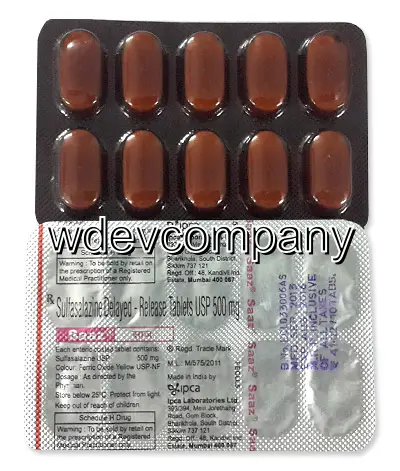
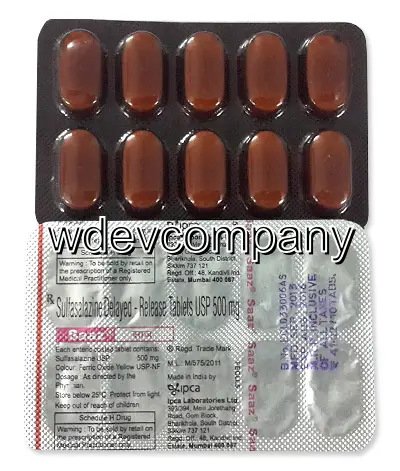
Sulfasalazine is a medication widely used in the treatment of inflammatory bowel diseases such as ulcerative colitis and Crohn's disease. It is also prescribed for rheumatoid arthritis in certain cases. This drug is part of the sulfonamide class and combines a sulfonamide antibiotic with an anti-inflammatory agent. Its dual function makes it effective in reducing inflammation and alleviating symptoms associated with these chronic conditions.
Once ingested, sulfasalazine is broken down in the colon by bacteria into its active components. These include sulfapyridine and 5-aminosalicylic acid (5-ASA). The anti-inflammatory properties primarily come from 5-ASA, which acts locally on the intestinal lining to decrease inflammation. The sulfapyridine component contributes to some of the medication’s antibacterial effects. This combination helps in managing symptoms like diarrhea, rectal bleeding, and abdominal pain associated with inflammatory bowel disease.
Many patients report significant relief in their symptoms after starting sulfasalazine. It can take several weeks for full therapeutic effects to become noticeable. Consistent adherence to the prescribed dosage is important to achieve optimal results. Some users experience improved quality of life, especially those dealing with active inflammatory bowel conditions. For rheumatoid arthritis, sulfasalazine can reduce joint pain, swelling, and stiffness, though results vary among individuals.
While generally effective, sulfasalazine can cause side effects. The most common include nausea, loss of appetite, and dizziness. Some patients may develop allergic reactions, including skin rashes or flu-like symptoms. Gastrointestinal upset is also frequently reported. Long-term users should have regular blood tests to monitor for blood cell abnormalities or liver function issues, as rare but serious side effects can occur. Patients with sulfa allergies should avoid this medication and discuss alternatives with their healthcare provider.
It is important to follow the prescribed dosing schedule when using sulfasalazine. Taking the medication with food can help reduce stomach upset. Patients are advised to stay well-hydrated and report any unusual symptoms promptly. Regular blood tests can help detect adverse effects early. If side effects become severe or intolerable, consulting the doctor for possible adjustments or alternative treatments is recommended. Always inform the doctor about other medications, as sulfasalazine can interact with certain drugs, including blood thinners and other anti-inflammatory agents.
14–21 days. Free from $200.00 .
5–9 days. $30.00
−10% when paying with cryptocurrency.
−10% on all repeat orders.
All orders are packed in neutral, unbranded boxes with no product name on the outside.